
Buying a home is one of the most important financial and emotional decisions in life. While most buyers focus on the size of the flat, amenities, and location, there is one crucial factor that often goes unnoticed yet plays a major role in long-term value and ownership rights — UDS in flats. Understanding this concept can make a significant difference in how secure and valuable your property investment truly is.
In India’s real estate market, especially in apartment complexes and high-rise buildings, ownership does not only involve the built-up area of your flat. A large part of your legal ownership is connected to the land on which the building stands. This is where UDS in flats, or Undivided Share of Land, becomes extremely important.
This blog explains in detail what UDS in flats means, why it matters, how it is calculated, and how it impacts resale value, redevelopment rights, and legal ownership. If you are planning to buy a flat or already own one, this knowledge will help you make informed and confident decisions.
Table of Contents
ToggleWhat Is UDS in Flats?
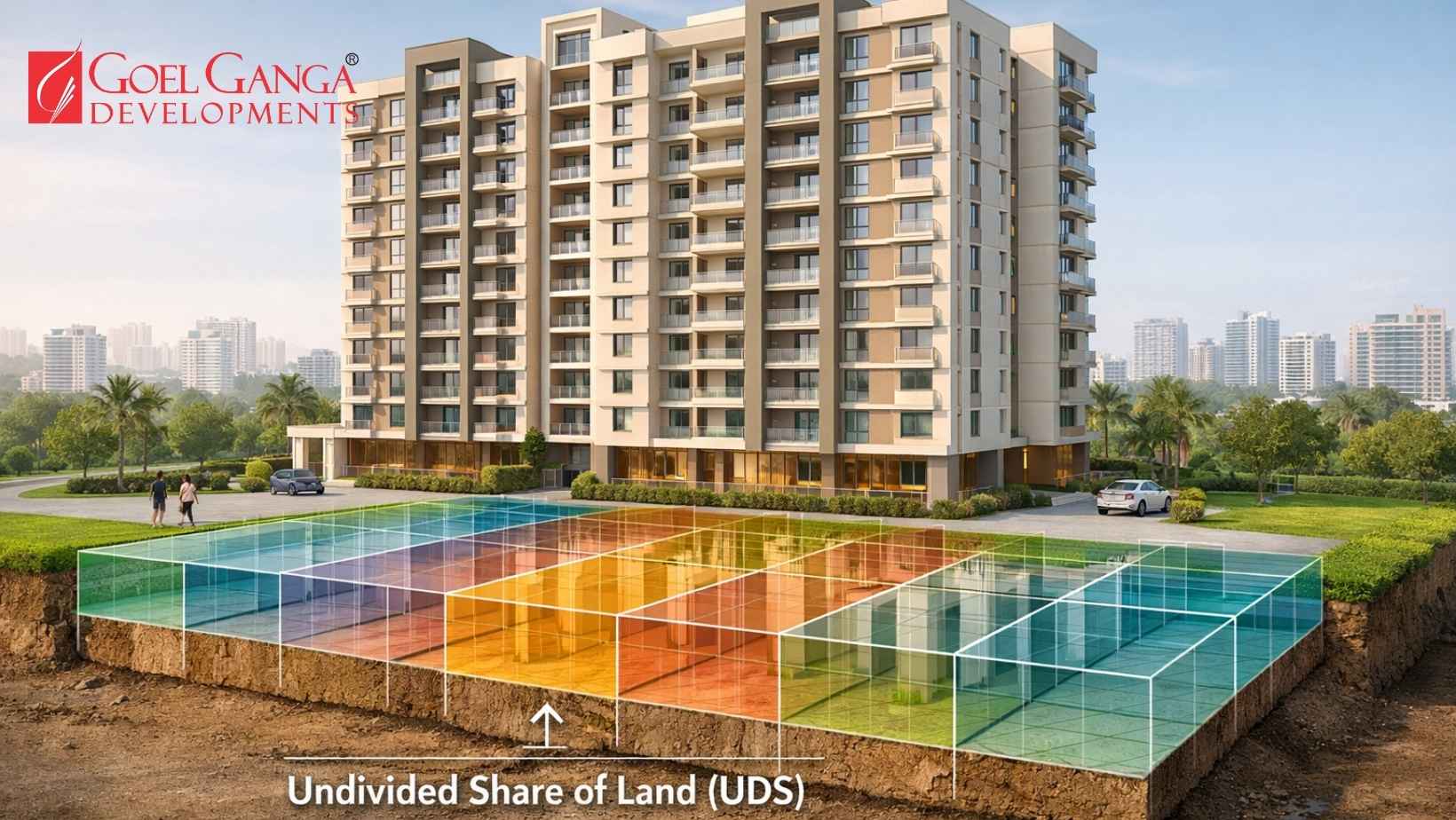
UDS in flats stands for Undivided Share of Land. It refers to the portion of land that legally belongs to a flat owner in a residential project. Even though the land is not physically divided, every apartment owner owns a proportionate share of the total land.
When you buy a flat in an apartment building, you are not just buying the constructed space within four walls. You are also becoming a co-owner of the land on which the entire building is built. This ownership is expressed as a fraction or percentage and is known as UDS in flats.
For example, if an apartment project is built on 10,000 square feet of land and consists of multiple flats, each flat owner owns a calculated share of that land. That share is recorded in the sale deed and is legally transferable.
Why UDS in Flats Is More Important Than You Think
Many buyers believe that only the flat area determines property value. However, in reality, land appreciates faster than construction. Over time, the building structure may depreciate, but the land value usually increases. This makes UDS in flats a critical factor in long-term wealth creation.
It determines your legal stake in the land, which becomes especially important during redevelopment, reconstruction, or if the building needs to be demolished in the future. Without sufficient UDS, flat owners may face challenges in claiming fair rights during redevelopment.
Another important aspect is that banks and financial institutions evaluate UDS in flats while approving home loans. A clear and legally defined UDS adds credibility to the property and reduces risk for lenders.
Legal Significance of UDS
From a legal standpoint, UDS in flats establishes your ownership rights beyond the constructed area. It is mentioned in the registered sale deed and forms the foundation of property ownership.
If a building faces structural issues after several decades and requires redevelopment, the compensation or rebuilt flat allocation is usually based on the UDS held by each owner. A higher UDS in flats means a stronger claim during such negotiations.
In court disputes related to land ownership, redevelopment, or property inheritance, UDS in flats acts as a crucial legal reference. This is why reputed developers ensure transparent disclosure of UDS at the time of sale.
UDS in Flats vs Carpet Area vs Built-Up Area
Many buyers get confused between different area terms used in real estate. While carpet area refers to the usable internal space of the flat and built-up area includes walls and balconies, UDS in flats relates entirely to land ownership.
Carpet area defines comfort and usability, but UDS defines ownership and long-term value. Two flats with the same carpet area can have different UDS depending on the total land size and number of units in the project.
Understanding this distinction helps buyers evaluate not just the living space but also the investment quality of a property.
How UDS Is Calculated
The calculation of UDS in flats follows a simple principle but requires accurate project details. The formula used is:
UDS = (Individual Flat Built-Up Area ÷ Total Built-Up Area of All Flats) × Total Land Area
Let’s understand this with an example.
Assume a residential project is built on a land parcel of 20,000 square feet. The total built-up area of all flats in the project is 40,000 square feet. If your flat has a built-up area of 1,000 square feet, your UDS in flats would be:
(1,000 ÷ 40,000) × 20,000 = 500 square feet
This means you legally own 500 square feet of the land, even though it is not physically demarcated.
Factors That Influence UDS
Several factors affect the calculation and value of UDS in flats. The most important factor is the total land area of the project. Projects built on larger land parcels generally offer higher UDS per flat. The number of flats in the project also plays a major role. A project with fewer units on the same land area will provide higher UDS in flats compared to a densely packed development.
The built-up area of individual flats also impacts UDS. Larger flats usually carry a higher undivided share of land, making them more valuable from an ownership perspective.
UDS in Flats and High-Rise Apartments
In modern cities, high-rise buildings are becoming increasingly common due to land scarcity. However, in such developments, UDS in flats tends to be lower because the same land is shared among many more apartments. While high-rise living offers amenities and views, buyers should carefully assess the UDS mentioned in the sale agreement. Lower UDS may affect future redevelopment benefits and land value appreciation.
This does not mean high-rise flats are a bad investment, but buyers should balance lifestyle benefits with ownership fundamentals.
Importance of UDS in Flats During Redevelopment
Redevelopment is one of the most critical stages where UDS in flats proves its true value. When an old building is redeveloped, the land becomes the primary asset, not the old structure. During redevelopment negotiations, developers usually allocate new flats or compensation based on the UDS owned by each flat owner. Higher UDS ensures better bargaining power, larger replacement flats, or better financial compensation.
This is why experienced buyers and investors always check it before purchasing property in older buildings.
How UDS Impacts Resale Value
A flat with a clearly defined and higher UDS in flats generally enjoys better resale demand. Informed buyers increasingly ask about UDS because it reflects the real ownership stake in the property. In premium locations where land prices are high, UDS becomes even more important. Buyers are willing to pay more for flats with better land share, even if the built-up area is similar.
Developers like Goel Ganga Developments emphasize transparency and legal clarity in property documentation, which helps buyers clearly understand their UDS and long-term ownership rights.
Common Misconceptions About UDS
One common misconception is that it can be used or occupied physically. In reality, it is a legal concept and does not grant exclusive access to any portion of land. Another misunderstanding is that amenities like parking or gardens increase UDS. While they add lifestyle value, they do not change the legal calculation of UDS.
Some buyers also assume that super built-up area influences UDS, but it is usually calculated using built-up area, not loading or common area percentages.
How to Verify UDS Before Buying
Before purchasing a flat, buyers should always check the sale deed draft to ensure UDS in flats is clearly mentioned. It should specify the exact share of land in square feet or percentage. Buyers can also cross-check UDS details with the approved building plan and land documents. Consulting a legal expert or property lawyer can help verify whether the UDS mentioned is accurate and fair.
Never rely solely on verbal assurances. Proper documentation is essential for protecting your ownership rights.
UDS in Flats and Home Loans
Banks and housing finance companies assess UDS in flats as part of their due diligence process. Properties with unclear or disputed land ownership often face loan rejection or delayed approvals. Clear UDS documentation improves loan eligibility and ensures smoother financial transactions. This is another reason why reputed developers with transparent practices are preferred by lenders and buyers alike.
Future Value of UDS in Flats
As urban land becomes scarcer, the importance of UDS in flats will only increase. In the long run, flats with better land share will offer superior returns, whether through appreciation, resale, or redevelopment benefits. With increasing awareness among buyers, UDS is gradually becoming a key decision-making factor rather than a hidden legal term.
Final Thoughts on UDS in Flats
Understanding UDS in flats empowers buyers to make smarter real estate decisions. It goes beyond aesthetics and amenities and touches the core of property ownership — land. Whether you are buying your first home or investing for the future, always evaluate the UDS mentioned in the sale deed. It determines your legal rights, financial security, and long-term gains.
A well-informed buyer is always better protected, and knowledge of It ensures that your investment stands strong not just today, but decades into the future.
FAQ: UDS in Flats
What is UDS in flats in simple terms?
UDS means the portion of land that legally belongs to a flat owner in an apartment building. Even though the land is not physically divided, every flat owner owns a calculated share of the total land on which the building is constructed.
Why is UDS in flats important when buying a flat?
It is important because land value appreciates over time, while buildings depreciate. A higher UDS gives you stronger ownership rights, better resale value, and greater benefits during redevelopment or reconstruction of the building.
How is UDS in flats calculated?
It is calculated by dividing the built-up area of an individual flat by the total built-up area of all flats, and then multiplying it by the total land area.
This formula ensures that each owner receives a proportionate share of land.
Is UDS in flats mentioned in the sale deed?
Yes, UDS in flats must be clearly mentioned in the registered sale deed. It is a legal proof of land ownership and should be verified before purchasing a flat.
Does carpet area affect UDS in flats?
No. It is usually calculated based on built-up area, not carpet area. Carpet area determines usability, while UDS determines land ownership.
Can two flats of the same size have different UDS?
Yes. Two flats with the same carpet area can have different UDS in flats depending on the total land size, number of units in the project, and overall built-up area distribution.
Is higher UDS in flats always better?
In most cases, yes. Higher UDS in flats means a larger share of land, which improves long-term value, redevelopment benefits, and ownership security—especially in prime urban locations.
How does UDS in flats affect redevelopment?
During redevelopment, new flat allocation or compensation is usually based on UDS. Owners with higher UDS in flats typically receive better terms, larger replacement homes, or higher compensation.
Does UDS in flats matter for home loans?
Yes. Banks and housing finance companies check UDS in flats before approving loans. Clear and legally defined UDS reduces risk and improves loan eligibility.
Is UDS in flats applicable to high-rise buildings?
Yes. However, It is usually lower in high-rise apartments because the same land is shared among many more units. Buyers should evaluate this carefully before purchasing.
Can UDS in flats change in the future?
No. Once registered, It remains fixed unless there is a legally approved redevelopment or reallocation of land share.
How can I verify UDS in flats before buying?
You should verify UDS details in the sale deed, approved building plans, and land documents. Consulting a legal expert ensures the UDS mentioned is accurate and transparent.
What happens if UDS in flats is not clearly defined?
If it is unclear or missing, it can create legal disputes, loan rejection, and complications during resale or redevelopment. Always insist on clear documentation.